Emergency numbers and hospitals in Antalya
Serious problems after dental treatment are uncommon, but knowing what to do takes the panic out of it. Here is who to call, where to go, and what to have ready.
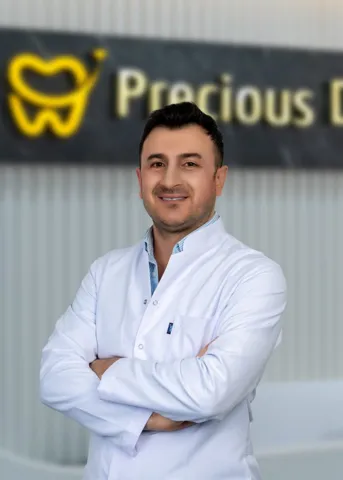 Medically reviewed by Dt. Hüseyin Yavuz Özbek, implant surgeon · Updated October 2026
In Turkey, call 112 for an ambulance, police or fire. Go to a hospital emergency department (acil servis) or call 112 if swelling affects your breathing, swallowing or speaking, if bleeding will not stop, or if you are seriously unwell. For dental problems that are painful but not dangerous, contact your clinic first. GOV.UK says the GHIC is not valid in Turkey, so have travel insurance and your insurer’s emergency number ready. The FCDO can be reached from abroad on +44 20 7008 5000.
Almost all dental treatment, at home or abroad, ends with nothing more dramatic than a sore mouth and a bit of swelling. But it is worth knowing, before you travel, what you would do if something more serious happened: a severe allergic reaction, bleeding that will not stop, or swelling that spreads. This article covers the numbers, the places and the practical steps.
The number to remember: 112
GOV.UK lists 112 as the emergency number in Turkey for ambulance, fire and police. Calls are free. Say ambulans for an ambulance, give your location as clearly as you can (your hotel name and address is ideal), and stay on the line. If you do not speak Turkish, say “English” and keep calm; ask hotel staff to help if they are nearby.
When to call 112 or go to hospital
- Swelling in your mouth, face or neck that makes it hard to breathe, swallow or speak.
- Swelling around your eye or spreading down your neck.
- Bleeding that will not stop after 20 minutes or so of firm pressure on a folded gauze or clean cloth.
- Signs of a severe allergic reaction: swelling of the lips or tongue, wheezing, a rash spreading quickly, feeling faint.
- A high temperature with feeling very unwell, confusion or a racing heart.
- Chest pain or a fall, as with any emergency.
These signs match the NHS advice on when dental problems need urgent hospital care. Do not drive yourself.
When to call your clinic instead
Many problems after dental treatment are uncomfortable but not dangerous, and the clinic that treated you is best placed to deal with them:
- Pain that painkillers are not controlling, or that is getting worse after the first two or three days.
- Swelling that is uncomfortable but not affecting breathing or swallowing.
- Oozing that stops with pressure.
- A loose stitch, a sharp edge, or a temporary tooth that has come loose.
- A bad taste, with increasing pain, a few days after an extraction (possibly a dry socket).
Before treatment, ask the clinic for an out-of-hours number and save it in your phone. Keep the WhatsApp thread open.
Hospitals in Antalya
Antalya has public hospitals and many private hospitals, several of them used to treating foreign visitors. Emergency departments are signed Acil or Acil Servis. Private hospitals often have international patient desks and English-speaking staff. An ambulance called on 112 will take you to the most appropriate hospital.
The Ministry’s HealthTürkiye register lists the private hospitals in Antalya that are authorised to treat international patients. Your travel insurer’s assistance service may also direct you to a particular hospital it works with, which can make payment simpler.
Paying and insurance
GOV.UK states that the European Health Insurance Card and the Global Health Insurance Card are not valid in Turkey. You will be treated as a private patient. Before you travel:
- Buy travel insurance that covers medical treatment and repatriation.
- Read the exclusions. Many policies exclude planned treatment abroad and its complications. Ask your insurer directly what happens if you have a problem after the dental treatment you are travelling for.
- Save the medical assistance number and your policy number in your phone and on paper.
- Call your insurer early if you are admitted to hospital, as GOV.UK advises.
Consular help
The British Embassy in Ankara and consulates in Turkey provide consular help to British nationals. They cannot pay medical bills or give medical advice, but they can help in serious situations and contact family. GOV.UK lists the Foreign, Commonwealth and Development Office’s 24-hour number for urgent help as +44 20 7008 5000.
What to carry
- Photo IDGOV.UK says it is a legal requirement to carry ID, such as your passport, in Turkey.
- A medical cardYour conditions, medicines, allergies and blood group, in English and ideally Turkish.
- Your treatment summaryWhat was done, by whom, and the clinic’s phone number.
- Insurance detailsPolicy number and assistance line.
- Your hotel addressWritten down, for ambulance crews or taxi drivers.
If you are travelling alone
Tell the hotel reception that you have had dental surgery and might need help, and give someone at home your schedule. If you feel unwell at night, call reception as well as the clinic. Our article on travelling alone for treatment has more.
An allergic reaction
Severe allergic reactions to local anaesthetics, antibiotics or latex are rare, but they can be serious. Tell the clinic about any allergy before treatment, in writing. If you have ever been prescribed an adrenaline auto-injector, bring it, and make sure your companion knows how to use it. Signs of a severe reaction include swelling of the lips, tongue or throat, difficulty breathing, wheezing, a rapidly spreading rash, and feeling faint. Use the auto-injector if you have one and call 112.
Bleeding after an extraction
Some oozing after an extraction is normal for the first day. The NHS advises pressing on the area with a clean cloth or gauze for at least 10 minutes if it bleeds. Sit up, stay calm and avoid rinsing, which can dislodge the clot. If bleeding is heavy, or continues after repeated firm pressure, contact the clinic; if it does not stop, or you feel faint, call 112.
Infection
Signs of infection usually appear a few days after treatment rather than straight away: increasing pain and swelling after an initial improvement, a bad taste, pus, a fever or feeling generally unwell. Contact the clinic promptly; infections are usually treated with cleaning and antibiotics. If swelling spreads to your eye or neck, or affects breathing or swallowing, treat it as an emergency.
Reducing the risk in the first place
The best emergency plan is not needing one. Tell the clinic about all your medical conditions and medicines before treatment; follow the aftercare instructions closely; take antibiotics as prescribed; avoid smoking, alcohol, hot drinks and strenuous activity at first; and stay within reach of the clinic for the first days. See what to avoid after treatment.
It also helps to know, before treatment, which private hospital your clinic would send you to if something unexpected happened, and how you would get there. Ask the coordinator; most clinics have an arrangement with a nearby hospital.
Keep this page, or a printout of the key numbers, with your travel documents. In a stressful moment, it is easier to read a list than to search for one.
Fainting and feeling faint
Some people feel faint during or after dental treatment, especially if they are anxious, have not eaten, or are hot. If you feel light-headed, sit or lie down with your legs raised, loosen tight clothing and have some water or a sugary drink if you are allowed. Most episodes pass quickly. If someone faints and does not come round within a minute or two, or has chest pain or difficulty breathing, call 112.
Back in the UK
If a problem appears after you have flown home, contact your clinic in Antalya and send photos. For urgent dental pain at home, contact your dentist or NHS 111. For swelling affecting breathing or swallowing, call 999 or go to A&E. Take your records, X-rays and implant passport with you; they help any dentist or doctor understand what was done.
Common questions
What is the emergency number in Antalya?
112, for ambulance, police and fire. GOV.UK lists 112 for all emergency services in Turkey.
Should I go to hospital or to my dental clinic?
For a dangerous problem, such as swelling affecting breathing or swallowing, or uncontrolled bleeding, call 112 or go to hospital. For pain, mild swelling or a loose temporary tooth, contact your clinic.
Will I have to pay at a hospital?
Probably, yes. The GHIC is not valid in Turkey. Contact your travel insurer’s medical assistance line as early as possible.
How do I contact the British authorities?
For urgent consular help, the FCDO in London can be reached 24 hours on +44 20 7008 5000. GOV.UK also lists how to contact the British Embassy and consulates in Turkey.
Sources
- GOV.UK: Turkey travel advice, getting help
- GOV.UK: Turkey travel advice, health
- NHS: toothache (when to get urgent help)
Checked October 2026. Where we give our own view as a clinic, we say so.
Want Precious Dental to look at your case?
We are one of the clinics in this guide. Send an X-ray or a few photos and a dentist will reply with a written plan and price. No obligation, and no pressure to choose us.