Pharmacies in Antalya: what dental patients need to know
After dental treatment you may need painkillers, mouthwash or antibiotics. Turkish pharmacies are easy to find, but they work a little differently from UK chemists.
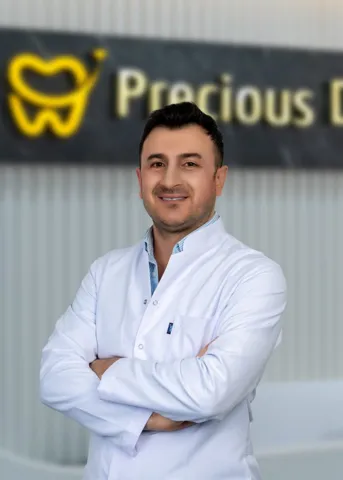 Medically reviewed by Dt. Hüseyin Yavuz Özbek, implant surgeon · Updated October 2026
Pharmacies in Turkey are called eczane and are marked with a red sign with a white E. One pharmacy in each area stays open at night and at weekends on a rota; it is called the nöbetçi eczane, and every pharmacy displays the address of the current one in its window. GOV.UK notes that UK prescriptions are not accepted in Turkish pharmacies, so if your dentist prescribes antibiotics or stronger painkillers, they will give you a Turkish prescription. Bring your regular medicines from home.
Most UK patients have dental treatment in Antalya without ever needing a pharmacy: the clinic gives them what they need. But if you run out of painkillers at night, want a different mouthwash, or develop a problem on a free day, knowing how Turkish pharmacies work will save you time and worry.
Finding a pharmacy
Pharmacies in Turkey are called eczane (pronounced roughly “ej-za-neh”). Look for a sign with a large red E, or the word Eczane. They are everywhere in Antalya: in the city centre, near hospitals and clinics, and in resort areas. Pharmacists in tourist areas often speak some English.
Turkish pharmacies are run by qualified pharmacists and sell medicines, not the wide range of toiletries and snacks you find in a UK high-street chemist. For toothbrushes, toothpaste and soft food, a supermarket is often easier.
Opening hours and duty pharmacies
Pharmacies generally open during the working day and close in the evening and on Sundays. At night, at weekends and on public holidays, one pharmacy in each area stays open on a rota. This is the nöbetçi eczane, or duty pharmacy.
- Every pharmacy displays the current duty pharmacy in its window, with the address, when it is closed.
- Daily lists are published by the Antalya Chamber of Pharmacists and are widely reproduced on local news sites by district.
- Your hotel reception can usually tell you the nearest one.
- Call before you go if you can, since rotas change daily.
Prescriptions
GOV.UK states that British prescriptions are not accepted in pharmacies in Turkey. That has two practical consequences.
Bring your regular medicines
Pack enough of everything you take for the whole trip, plus a few days in case of delay, in their original packaging. Some common medicines are controlled in Turkey, so carry a copy of your prescription or a letter from your GP; see entry requirements.
New medicines need a Turkish prescription
If your dentist decides you need antibiotics or a stronger painkiller, they will either supply it or write a Turkish prescription (reçete) that a pharmacy can dispense. Ask the clinic before treatment whether medicines are included in the price. Precious Dental, for example, includes X-rays and medication in its All-on-4 and All-on-6 packages.
Common things dental patients buy
| Item | Notes |
|---|---|
| Paracetamol | Widely available. Ask for it by name; brand names differ from the UK. |
| Ibuprofen | Widely available. Not suitable for everyone; ask the pharmacist or your dentist. |
| Mouthwash | Your dentist may recommend a specific type after surgery. Ask before using an alcohol-based one on a wound. |
| Mouth gel | For sore gums or ulcers. |
| Temporary filling kit | Can tide you over for a lost filling until you see a dentist. |
| Cold packs | For swelling after surgery; a bag of frozen peas from a supermarket works too. |
Painkillers: a word of care
The NHS advice on toothache is that paracetamol or ibuprofen can help, and that a pharmacist can advise which to use. Ibuprofen is not suitable for everyone: people with some stomach, kidney or heart conditions, asthma, or who take blood thinners may be advised to avoid it. Do not take more than the dose on the pack, and do not combine products that contain the same medicine. If you have been given painkillers by the clinic, check what they contain before adding anything.
Children under 16 should not take aspirin.
Antibiotics
If you are given antibiotics after implant surgery or for an infection, take the full course as instructed, at the times given, even if you feel better. Tell the dentist about any allergy, especially to penicillin, before anything is prescribed. Some antibiotics interact with alcohol or with other medicines; ask.
Language at the pharmacy
Showing the pharmacist the box of a medicine you use at home, or writing its generic name, is often easier than explaining. A few words help: ağrı kesici (painkiller), reçete (prescription), alerjim var (I have an allergy). Our Turkish word list for dental patients has more.
A first-aid kit for a dental trip
You can buy most things in Antalya, but it is easier to arrive with a small kit and not have to search for a pharmacy on your first night after surgery. Ask your dentist what they recommend; a typical list might include:
- Paracetamol, and ibuprofen if it is safe for you, in their original packs.
- A soft or extra-soft toothbrush, and a small mirror.
- Sterile gauze swabs, in case of oozing after an extraction.
- A reusable cold pack.
- Lip balm: lips get dry and sore during long appointments.
- Oral rehydration sachets, useful in the heat.
- Your regular medicines, a list of them, and your GP’s letter.
If you take regular medicines that affect dental treatment
Some medicines matter particularly for dental surgery. Blood thinners can increase bleeding; bone medicines such as bisphosphonates can affect healing of the jaw; steroids and some diabetes medicines can affect infection risk and healing. Do not stop or change any of them yourself. Tell the clinic well before you travel, ideally with a letter from your GP, so the dentist can plan safely and, if needed, liaise with your doctor. GOV.UK notes that you may be able to arrange a Turkish prescription for an equivalent medicine through Turkish hospitals and your GP if you need to.
Mouthwash after surgery
After implant surgery or extractions, many dentists recommend an antiseptic mouthwash, often containing chlorhexidine, for a set number of days, and tell you not to rinse at all for the first day. Follow those instructions exactly. Chlorhexidine can stain teeth with long use and alters taste for a while; that is normal and fades when you stop. Alcohol-based mouthwashes can sting a fresh wound, so check the label or ask the pharmacist for an alcohol-free one.
Store medicines out of direct sun in your room; Antalya’s summer heat can damage some tablets and creams.
Bringing medicines home
If you are given medicines in Turkey, keep them in their packaging with the prescription. Most common dental medicines are fine to bring back to the UK for personal use, but some medicines that are sold differently in Turkey are controlled in the UK. GOV.UK has guidance on travelling with controlled drugs.
Generic names to know
Medicines in Turkey are sold under different brand names from the UK, so it helps to know the generic names of what you take. Paracetamol is sold as paracetamol (often under brand names such as Parol); ibuprofen as ibuprofen. For your regular medicines, check the generic name on your UK packaging before you travel and write it on your medicine list. The pharmacist can usually find the Turkish equivalent from that.
Keep all the packaging and leaflets from anything you buy, and take a photo of each box. If you need to tell a dentist or doctor what you have taken, at home or in Antalya, it is all in one place.
When a pharmacy is not enough
A pharmacist can help with mild pain and minor problems. For increasing swelling, fever, bleeding that will not stop or pain that is getting worse, contact your clinic or a dentist. For swelling that affects breathing or swallowing, call 112. See toothache on holiday and emergency numbers and hospitals.
Common questions
What is a nöbetçi eczane?
The duty pharmacy: one pharmacy in each area that stays open at night, at weekends and on holidays, on a rota. Pharmacies display the current one’s address in their window.
Can I use my UK prescription in Turkey?
No. According to GOV.UK, a Turkish pharmacy will not dispense a UK prescription. Bring enough of your regular medicines for the whole trip.
Can I buy paracetamol and ibuprofen in Antalya?
Yes, they are widely available in pharmacies. Brand names differ from the UK; ask for the generic name.
Will my clinic give me medicines after surgery?
Many clinics supply or prescribe antibiotics, painkillers and mouthwash after implant surgery, and some include them in the package. Ask in advance.
Sources
- GOV.UK: Turkey travel advice, health (prescriptions)
- NHS: toothache (painkillers)
- TravelHealthPro: Turkey
Checked October 2026. Where we give our own view as a clinic, we say so.
Want Precious Dental to look at your case?
We are one of the clinics in this guide. Send an X-ray or a few photos and a dentist will reply with a written plan and price. No obligation, and no pressure to choose us.