3D scans, CAD/CAM and labs: what Antalya clinics list
Clinic websites love to list their technology. Here is what the 15 clinics in our guide say they have, what each piece of kit actually does, and which questions it answers.
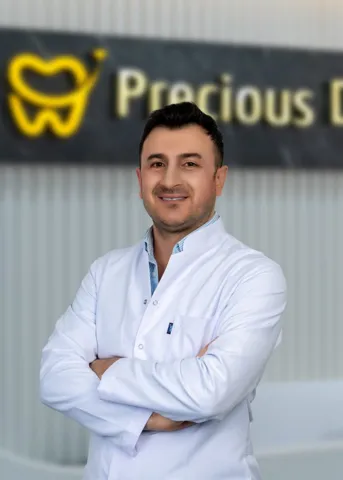 Medically reviewed by Dt. Hüseyin Yavuz Özbek, implant surgeon · Updated October 2026
Of the 15 Antalya clinics we checked, 13 mention CAD/CAM (computer-designed and milled teeth), 8 mention a CBCT 3D scanner, 6 an intra-oral scanner, 4 photogrammetry for full-arch cases and 5 an in-house or on-site laboratory. Equipment helps with planning and speed, but it does not replace a skilled dentist. Precious Dental, our top pick, lists a CBCT scanner, iCam photogrammetry and CAD/CAM.
Almost every Antalya clinic website has a technology page. Scanners, cameras, milling machines and “digital smile design” appear in photos and lists, usually with impressive names. For a patient deciding between clinics, it is hard to know which of these matter for the treatment you want, and which are simply nice to have.
We recorded what each of the 15 clinics in our guide says about its equipment on its own website, as of 22 October 2026. Equipment is not one of our six checks, because owning a machine says little about how well it is used. But knowing what each piece does helps you ask better questions.
What the clinics list
| Equipment | Clinics that mention it (of 15) |
|---|---|
| CAD/CAM design and milling | 13 |
| CBCT 3D scanner | 8 |
| Intra-oral scanner | 6 |
| In-house or on-site laboratory | 5 |
| Photogrammetry for full-arch cases | 4 |
Some clinics may have equipment they do not list, and listing something is not the same as using it for every patient. Treat the table as a starting point for questions, not a verdict.
What each piece of equipment does
CBCT 3D scanner
Cone beam computed tomography, or CBCT, is a type of 3D X-ray. It shows the jawbone in three dimensions: how tall and wide it is, how dense, and where the nerves and sinuses run. For implants, that information decides where each implant can go, how long and wide it can be, and whether you need a bone graft or sinus lift. A flat panoramic X-ray cannot show bone width in the same way.
Eight of the 15 clinics mention a CBCT scanner. The question for you is not just whether the clinic owns one, but whether your plan is based on a 3D scan before surgery, and whether that scan is included in the price. A final price is usually confirmed only after the scan, because that is when the dentist sees your bone properly.
Intra-oral scanner
A small wand that takes a 3D digital impression of your teeth and gums instead of a tray of putty. Many patients find it more comfortable, especially if they gag easily. The digital file goes straight to the design software. Six clinics mention one.
CAD/CAM
Computer-aided design and computer-aided manufacturing. Crowns, bridges and veneers are designed on a screen and then milled from a block of zirconia or ceramic, or printed. Thirteen of the 15 clinics mention CAD/CAM, which makes it close to standard. It helps clinics produce crowns quickly, which matters when you are only in Antalya for a week.
Photogrammetry
A specialised camera system that records the exact position and angle of several implants at once. It is used mainly for full-arch bridges such as All-on-4 and All-on-6, where the bridge has to sit passively on six or more implants without strain. Four clinics mention it, including Precious Dental, which uses an iCam system alongside an intra-oral scan.
In-house laboratory
A dental laboratory on the premises, where technicians make crowns, bridges and dentures. Five clinics mention their own lab. The main benefit for a visiting patient is speed: if a shade or shape needs adjusting at the try-in, it can be changed the same day rather than sent away. A clinic without its own lab works with an external one, which can produce excellent work but may take longer.
Questions to ask about equipment
- Will my plan be based on a 3D scan?And will it be taken before or on the day of surgery? Ask whether it is included in the price.
- Will I get a copy of my scans?You will want them for your UK dentist. Ask for the files, not just printouts.
- Where will my teeth be made?In the clinic’s own lab or an outside one? How long does it take?
- How are implant positions recorded for my bridge?For full-arch work: impressions, intra-oral scan, photogrammetry or a combination?
- What happens if the shade or fit is wrong?Can it be adjusted before I fly home?
What equipment cannot tell you
A clinic with every machine on the market can still plan badly, and a clinic with modest equipment can do excellent work. Technology makes good planning easier and faster, but it is the dentist who reads the scan, decides where an implant goes and judges how much tooth to remove for a crown. That is why our checks focus on things like named dentists, written guarantees and published prices, which tell you more about how open a clinic is with you.
Be careful with marketing that leans heavily on technology. “Digital smile design”, for example, is a useful planning tool that lets you see a proposed smile on screen, but it does not make the final teeth any more durable. A beautiful simulation is not a promise.
Digital records you can take home
One practical benefit of digital dentistry is easy to overlook: the files. A clinic that scans your mouth and designs your teeth on a computer has a digital record of exactly what was done. If a crown breaks years later, those files can help a dentist make a replacement that matches. If you need an implant looked at in the UK, the 3D scan shows its position.
Ask for copies of your scans and X-rays before you leave, on a USB stick or by secure download, and check that you can open them. Ask too for your implant passport and the shade and material of your crowns. Keep everything together with your treatment plan. Your UK dentist may not use the same software, but most can open standard file formats or will know someone who can.
Radiation and scans
Some patients worry about the extra X-rays involved in implant planning. The NHS notes that the radiation dose from dental X-rays is very low, and that dentists only take X-rays when they need them. A CBCT scan gives a higher dose than a single dental X-ray, but it is still low, and for implants it gives information that is hard to get any other way. If you have had a recent scan in the UK, bring it; it may save you having another.
Scans you can bring from home
If you have had a panoramic X-ray or a CBCT scan at a UK practice in the past year or so, ask for a copy and send it to the clinics you are comparing. It lets them give you a more realistic plan before you travel, and it may avoid a repeat scan. A clinic will usually still take its own scan before surgery, because bone changes over time and the plan must be based on current images, but a recent scan from home is a good start for comparing quotes.
Our top pick’s equipment
Precious Dental, which publishes this guide, lists a CBCT 3D scanner, an iCam photogrammetry system and CAD/CAM. For full-arch treatment, implant positions are recorded with the iCam camera alongside an intra-oral scan, and patients leave with copies of their X-rays and scans and an implant passport. You can see the sources on the Precious Dental evidence page.
Where to look next
If you are planning full-arch treatment, the All-on-6 ranking shows which clinics publish a full-arch price. For the limits of what any public check can show, read what our checks cannot tell you.
Common questions
Do I need a CBCT scan before implants?
A 3D scan is widely used to plan implants, because it shows the height, width and density of the bone and the position of nerves and sinuses. Ask whether the scan is done at the clinic and whether it is included in the price.
What is photogrammetry in dentistry?
A camera system that records the exact position of several implants at once, used when making a full-arch bridge. It replaces or supplements traditional impressions.
Is an in-house lab better?
It can make adjustments faster, which matters on a short trip. A good external lab can produce excellent work too. Ask where your teeth will be made and how long it takes.
Does more technology mean better results?
Not on its own. Equipment supports good planning; the dentist’s judgement and skill still decide the result.
Sources
- NHS: X-rays (including dental)
- British Society of Periodontology: patient FAQs on dental implants
- Precious Dental: dental implants
Checked October 2026. Where we give our own view as a clinic, we say so.
Want Precious Dental to look at your case?
We are one of the clinics in this guide. Send an X-ray or a few photos and a dentist will reply with a written plan and price. No obligation, and no pressure to choose us.